
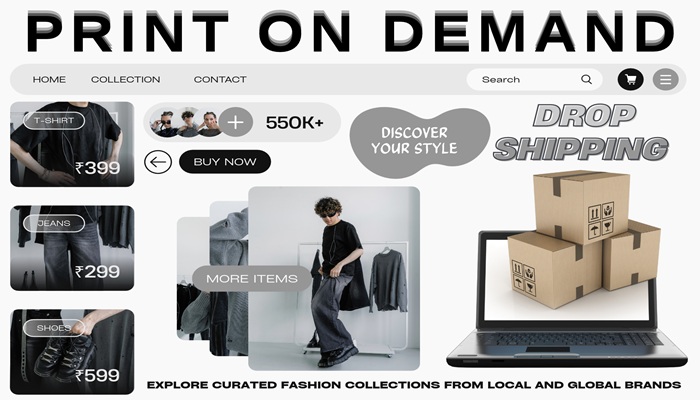
The way people shop for clothing has changed significantly over the last few years. Customers are no longer interested only in mass-produced products. Many people now prefer clothing that reflects their personality, interests, hobbies, and individual style. This growing demand for personalized products has created new opportunities for online entrepreneurs.
One business model that has gained attention in the e-commerce industry is Print on Demand (POD). It allows entrepreneurs to sell customized products without purchasing large quantities of inventory or managing their own printing facilities.
Whether you are interested in launching a clothing brand, selling creative designs, or exploring an online business opportunity, understanding how Print on Demand works can help you make better decisions.
In this guide, we will explore the meaning of Print on Demand, how the business model operates, its benefits, challenges, and the important steps involved in starting a POD business.
What Is Print on Demand?
Print on Demand is a business model in which products are manufactured or printed only after a customer places an order.
Unlike traditional retail businesses, where sellers purchase products in bulk and store them in a warehouse, POD businesses do not need to maintain large inventories.
For example, imagine that you want to sell a T-shirt featuring your own artwork. Instead of purchasing 100 printed T-shirts in advance, you can upload your design to a Print on Demand platform and make the product available in your online store.
When someone purchases that T-shirt, the printing partner receives the order, prints the design on the selected product, packs it, and ships it to the customer.
This approach allows entrepreneurs to concentrate on product ideas, branding, marketing, and customer experience rather than managing the entire manufacturing process.
How Does the Print on Demand Business Model?
The Print on Demand process generally involves five important stages.
1. Create Your Product Design
The first step is developing an original design that appeals to your target audience.
You can create designs using graphic design software or illustration tools. Some popular options include Canva, Adobe Illustrator, and other design applications.
Your designs might include:
Minimalist typography.
Inspirational messages.
Nature-inspired artwork.
Abstract illustrations.
Fitness and sports themes.
Personalized names and graphics.
Originality is important. Avoid using copyrighted artwork, protected brand logos, celebrity photographs, or trademarked slogans without proper permission.
2. Choose a Print on Demand Partner
A printing partner is responsible for producing and fulfilling your orders.
Depending on the provider, available services may include:
T-shirt and hoodie printing.
Sweatshirts and other apparel.
Customized accessories.
Printing and packaging.
Order fulfillment.
Shipping and delivery.
Before choosing a provider, compare product quality, printing methods, production costs, delivery timelines, available products, and customer support.
For businesses targeting Indian customers, it is useful to consider providers that offer domestic fulfillment and transparent shipping charges.
3. Set Up Your Online Store
Your online store is where customers discover products, explore designs, and place orders.
You can build an online store using platforms such as WordPress with WooCommerce, Shopify, or other e-commerce solutions.
A professional store should include:
An attractive homepage.
Well-organized product categories.
Clear product photographs.
Accurate product descriptions.
Size and colour options.
Transparent pricing.
Shipping and return information.
Secure payment options.
Contact information.
A simple and user-friendly shopping experience can help customers find products and complete their purchases more easily.
4. Receive and Fulfil Customer Orders
When a customer places an order, the order details are forwarded to the fulfillment provider, either manually or through an integration.
The printing partner prepares the product according to the selected design and specifications.
After production, the product is packed and shipped to the customer’s delivery address.
The store owner is generally responsible for communicating with customers, managing enquiries, monitoring orders, and resolving customer service issues.
5. Earn Profit From Each Sale
The difference between your selling price and total business expenses determines your profit.
For example, consider a customized T-shirt with the following estimated costs:
Base product cost: ₹180
Printing cost: ₹150
Additional fulfillment expenses: ₹30
Total estimated cost: ₹360
Selling price: ₹599
The difference is ₹239 before any additional expenses.
However, this amount should not automatically be considered your final profit. Payment gateway charges, applicable taxes, marketing expenses, discounts, returns, and other costs may reduce your earnings.
Understanding the complete cost structure is essential when setting product prices.
Benefits of Starting a Print on Demand Business
Print on Demand offers several advantages, especially for entrepreneurs who want to enter the e-commerce market with a relatively flexible business model.
Low Initial Inventory Investment
One of the biggest advantages is that you do not need to purchase large quantities of finished products before making sales.
This reduces the need for warehouse space and helps avoid holding unsold inventory.
Easy Product Customization
You can experiment with different designs, colours, product types, and collections.
For example, a clothing store can offer separate collections for men, women, kids, and unisex customers.
New designs can be introduced without purchasing large quantities of stock in advance.
Opportunity to Build Your Own Brand
Print on Demand makes it possible to create a distinctive clothing brand around your creative ideas.
You can develop your own visual identity, product collections, packaging preferences, and marketing style.
Over time, consistent branding and product quality can help your store establish customer recognition.
Flexible Product Testing
You can introduce different designs and observe which products attract customer interest.
This allows you to learn about customer preferences before investing more time and resources into a particular product category.
Focus on Marketing and Creativity
Since production and fulfillment are handled by a printing partner, store owners can spend more time improving their designs, creating useful content, developing social media campaigns, and building customer relationships.
Challenges You Should Understand Before Start
Although Print on Demand offers flexibility, it is not a business model without challenges.
Lower Profit Margins
Individual product manufacturing and printing can cost more than bulk production.
Therefore, carefully calculate your product costs, shipping expenses, payment fees, and marketing budget before deciding on a selling price.
Dependence on Fulfillment Partners
Your printing partner plays an important role in product quality and delivery.
Delays, printing mistakes, damaged products, or stock availability issues can affect customer satisfaction.
Choose a reliable provider and understand its replacement and refund policies.
Strong Market Competition
Many online stores sell customized T-shirts, hoodies, and accessories.
Simply uploading a design may not be enough to attract customers.
A clear brand identity, original designs, quality products, and effective marketing can help your business stand out.
Product Quality Control
The appearance of a design on a computer screen may differ from the final printed product.
Colours, print placement, fabric texture, and sizing can vary.
Ordering product samples before launching a collection is a practical way to evaluate quality.
How to Choose the Right Niche for POD Store
A niche is a specific audience or product category that your business focuses on.
Instead of trying to sell every type of clothing to everyone, consider selecting a category that matches your design interests and customer demand.
Some possible clothing niches include:
Fitness and gym-inspired apparel.
Minimalist everyday fashion.
Travel and adventure clothing.
Pet-inspired T-shirts.
Inspirational typography designs.
Indian cultural and artistic themes.
Casual oversized T-shirts.
Personalized gifts.
Research your potential customers before developing a large collection.
Think about their interests, preferred clothing styles, price expectations, and the type of designs they are likely to purchase.
A focused product range can make your branding and marketing more consistent.
Tips to Create Successful POD Clothing Designs
Good designs are an important part of a clothing brand.
Here are some practical suggestions:
Understand your audience: Create artwork that connects with the interests and lifestyle of your intended customers.
Keep designs readable: Typography-based designs should be clear and visually balanced.
Use suitable colours: Select colours that complement the fabric and remain visible against different garment backgrounds.
Check print specifications: Follow your printing partner’s recommended file formats, dimensions, resolution, and transparent-background requirements.
Avoid copyright problems: Create original artwork or use assets with suitable commercial licenses. Do not assume that an image found online is free to use.
Test before publishing: Review a physical sample whenever possible to check print quality and garment comfort.
Marketing Strategies for a POD Clothing Store
Having an online store does not automatically guarantee sales. Customers need to discover your products and understand why they should choose your brand.
Consider the following marketing strategies.
Search Engine Optimization
Create informative product descriptions, useful blog articles, and well-organized category pages.
Use relevant keywords naturally in your content. Don’t repeat the same keyword unnecessarily. Using words naturally rather than artificially is very important in search engine optimization.
For example, an online clothing store might publish articles about T-shirt fabrics, hoodie materials, clothing care, and fashion styling.
Social Media Marketing
Platforms such as Instagram, Facebook, and Pinterest can help clothing brands showcase their collections.
You can share product photographs, styling ideas, new arrivals, behind-the-scenes content, and customer feedback.
Use consistent branding and maintain a regular posting schedule.
Content Marketing
A blog can attract visitors who are researching clothing, fashion, and customized apparel.
Consider publishing helpful topics such as:
How to Choose the Right T-Shirt Fabric.
Oversized T-Shirts vs Regular Fit T-Shirts.
How to Style a Casual Hoodie.
How to Wash and Maintain Printed T-Shirts.
What Makes a Good Quality Printed T-Shirt?
Focus on answering real customer questions rather than writing articles only to include keywords.
Customer Experience
Good customer service can encourage repeat purchases.
Provide accurate product information, clear sizing guides, realistic delivery estimates, and responsive support.
Make sure customers understand your shipping, cancellation, exchange, and refund policies before placing an order.
Is Print on Demand Suitable for Beginners?
Print on Demand can be a suitable option for beginners who want to explore online retail without investing heavily in inventory.
However, it still requires planning, research, creativity, and consistent effort.
A beginner should start with a manageable product collection, understand the fulfillment process, test product quality, and calculate realistic selling prices.
It is also important to remember that building a profitable clothing brand takes time. Results depend on product selection, customer demand, pricing, marketing, and the quality of the overall shopping experience.
Final Thoughts
Print on Demand offers an interesting opportunity for creative entrepreneurs who want to build an online clothing business without managing traditional inventory.
From designing custom T-shirts to developing a recognizable clothing brand, the model provides flexibility to experiment with products and reach customers online.
However, long-term success requires more than attractive designs. Product quality, reliable fulfillment, realistic pricing, customer service, and consistent marketing all play important roles.
Start with a clear business idea, understand your target audience, test your products, and improve your store based on customer feedback.
With careful planning and a commitment to delivering value, Print on Demand can become a practical foundation for building an independent online clothing brand.